
Apache Wells Lawn Edging Services
Choose our Lawn Edging for professional, precise borders that enhance curb appeal, prevent grass overgrowth, and give your landscape a polished, low-maintenance finish.
Get a Free QuoteOur Apache Wells Landscaping & Yard Care Services
When to Schedule Lawn Edging in Apache Wells, Arizona – Seasonal Guide
In Apache Wells, Arizona, the timing of lawn edging is crucial for maintaining a crisp, healthy landscape throughout the year. Due to our region’s unique desert climate, with hot summers and mild winters, the best periods for lawn edging are typically in early spring and late fall. These seasons offer moderate temperatures and reduced drought risk, allowing grass and borders to recover quickly from edging work. Neighborhoods near the Apache Wells Country Club and along North 56th Street often experience microclimates influenced by shade from mature trees and proximity to golf course irrigation, which can affect the ideal schedule for edging.
Local environmental factors such as the area’s alkaline soil, sporadic rainfall, and the risk of late spring frosts should be considered when planning your lawn care routine. For example, properties near Red Mountain Freeway may face higher wind exposure, while homes closer to the community center benefit from more consistent shade coverage. Understanding these local nuances ensures your lawn edging is both effective and sustainable.
Benefits of Lawn Edging in Apache Wells
Enhanced Curb Appeal
Weed Growth Prevention
Defined Landscape Borders
Low Maintenance Solutions
Increased Property Value
Professional Installation Expertise
Apache Wells Lawn Edging Types

Brick Lawn Edging
-
Metal Landscape Edging
-
Plastic Lawn Edging
-
Natural Stone Edging
-
Concrete Curb Edging
-
Wooden Landscape Borders
-
Rubber Lawn Edging
Our Lawn Edging Process
Site Evaluation
Marking Edges
Cutting the Edge
Debris Removal
Final Inspection
Why Choose Apache Wells Landscape Services
-
Apache Wells Homeowners Trust Us
-
Reliable Lawn Maintenance
-
Competitive Pricing
-
Professional Team
-
Satisfaction Guarantee
-
Personalized Service
-
Timely Project Completion
Coordinating Lawn Edging Services with Mesa Public Works in Apache Wells
Apache Wells is an unincorporated community situated within the City of Mesa's jurisdictional boundaries in the East Valley of the Phoenix metropolitan area. Residents and property managers undertaking lawn edging should be aware that debris generated along curb lines, sidewalks, and hardscape borders falls under Mesa's municipal maintenance and stormwater management framework. Grass clippings, soil fragments, and organic material displaced during edging must not be swept or blown into street gutters, curb inlets, or storm drains. Mesa's Streets and Transportation division oversees right-of-way conditions along public roadways adjacent to residential properties, and any edging work that encroaches on public sidewalks or curb areas should conform to the city's engineering and maintenance expectations.
- Keep all edging debris—clippings, soil, and root material—off public curb faces and storm-drain inlets
- Bag or collect displaced material promptly rather than allowing it to migrate into street drainage
- Verify current right-of-way boundaries before edging along public sidewalks or medians
- Contact Mesa's development services office if edging work coincides with any frontage modification or hardscape alteration
Mesa Streets & Transportation
Official Website: Mesa Streets & Transportation
Mesa Engineering Design Standards
Official Website: Mesa Engineering Design Standards
How Apache Wells's Low-Desert Heat and Alkaline Soils Affect Lawn Edging
Apache Wells sits in USDA Hardiness Zone 9b–10a within the low Sonoran Desert, where summer temperatures routinely exceed 110°F and soils are characteristically alkaline, often with caliche layers at shallow depth. These conditions directly influence lawn edging outcomes. Bermudagrass—the dominant warm-season turf in this area—spreads aggressively through stolons and rhizomes, meaning edges along walkways, driveways, and landscape borders require frequent re-cutting to maintain clean lines. The University of Arizona Cooperative Extension notes that bermudagrass vigor increases substantially during the hottest months, accelerating lateral encroachment into hardscape joints and gravel borders.
- Caliche interference: Subsurface caliche layers can deflect edging blades and make mechanical trenching along borders difficult, requiring blade depth adjustments
- Reflected heat: Concrete driveways, block walls, and decorative rock amplify radiant heat along turf margins, causing uneven growth and accelerated drying at edges
- Alkaline soil crusting: High-pH soils in Apache Wells tend to form surface crusts that resist clean vertical cuts, particularly when irrigation has been insufficient
- Irrigation overspray: Turf edges adjacent to hardscape frequently receive uneven water distribution, promoting either excessive stoloniferous growth or drought-stressed margins depending on sprinkler head placement
Soil conditions in the area commonly include compacted subdivision fill and imported topsoil layered over native alkaline sandy loam, as documented through the USDA Web Soil Survey.
Navigating Apache Wells's Stormwater and Property Maintenance Regulations for Edging
Lawn edging in Apache Wells must comply with Mesa's municipal codes governing property maintenance and stormwater discharge. Under the city's participation in Arizona's Phase II Municipal Separate Storm Sewer System (MS4) program, organic debris and sediment from landscape maintenance activities—including edging—must not enter the municipal storm sewer system. This obligation applies to both property owners and any contracted service providers performing work on residential or commercial parcels.
- Edging debris that enters curb inlets or drainage channels may constitute an illicit discharge under the Clean Water Act and Arizona DEQ stormwater regulations
- Properties adjacent to retention basins, flood-control channels, or designated washes should exercise particular care to prevent soil and clipping migration during and after edging
- Mesa's development codes address frontage maintenance standards; residents should verify current requirements through the city's codes and ordinances portal
Mesa Environmental Services
Official Website: Mesa Environmental Services
The Arizona Department of Water Resources also provides landscaping guidance relevant to irrigation management along turf edges, particularly where overspray onto hardscape contributes to water waste and runoff.
Timing and Methods for Professional Lawn Edging in Apache Wells's Climate
Professional lawn edging in Apache Wells follows seasonal patterns dictated by bermudagrass growth cycles and the region's extreme heat. The primary edging season runs from late March through October, when bermudagrass is actively growing and stolons aggressively cross hardscape boundaries. During winter months, properties overseeded with perennial ryegrass may still require periodic edge maintenance, though growth rates are substantially reduced. The University of Arizona Turfgrass Research program provides regionally calibrated guidance on turf management timing applicable to low-elevation Arizona communities.
- Mechanical edging along concrete walks and driveways should follow a vertical-blade approach to create a clean trench that discourages lateral stolon re-entry
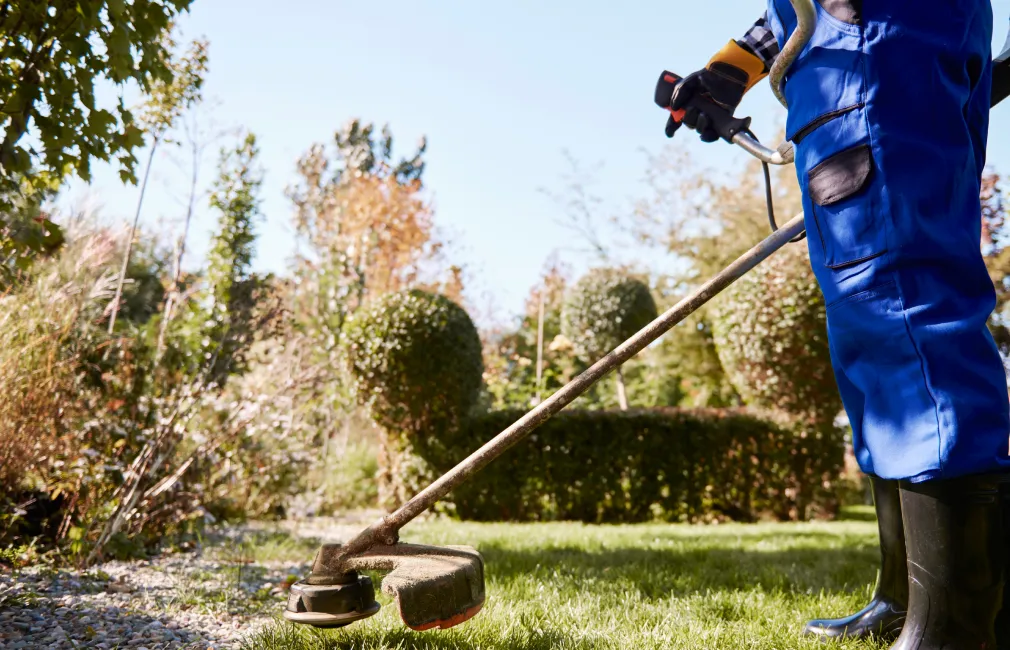
- String-trimmer edging is appropriate for softer borders between turf and gravel or decomposed granite beds but produces more scattered debris requiring immediate collection
- Edging frequency during peak summer growth typically ranges from every two to four weeks, depending on irrigation intensity and turf vigor
- Early-morning scheduling is strongly recommended during June through September to reduce heat exposure for workers and to avoid edging during active irrigation cycles
- Edging adjacent to drip-irrigated planting beds should avoid disturbing emitter lines or supply tubing buried near the turf-to-bed transition
After each edging session, all displaced material should be swept from hardscape surfaces and collected rather than hosed into gutters. This practice supports both stormwater compliance and neighborhood appearance standards maintained through many Apache Wells homeowner associations.
What Neighborhoods Do We Serve Throughout Apache Wells, AZ?
- Apache Wells Mobile Home Community — This established 55-plus community features compact lots with mature bermudagrass borders along sidewalks and shared pathways, requiring precise edging to maintain clean transitions between turf and concrete.
- Leisure World — Adjacent to Apache Wells proper, this retirement community includes irrigated turf parcels with curb-adjacent grass strips that benefit from regular mechanical edging to control stolon encroachment.
- Velda Rose Estates — Properties here often feature older irrigation systems and turf borders along block-wall fencing, where reflected heat accelerates edge growth and demands more frequent maintenance.
- Fountain of the Sun — This nearby community includes common-area turf edges along walking paths and shared landscape borders that require coordinated edging schedules to maintain uniform appearance.
- Sunland Village — Larger lot sizes and mixed hardscape-to-turf transitions characterize this area, where edging work must account for decomposed granite borders and retention-area adjacency.